Recognizing the Signs of a Stroke
By: Alissa M. Macias, RN, MSN, FNP-BC
Jamie was visiting her grandmother, Anne. The two of them were enjoying lunch together when Jamie noticed something a little bit off about her grandmother. Anne started speaking gibberish but seemed frustrated when Jamie could not understand her. Additionally, Anne’s face appeared uneven, the left side was drooping. Jamie called an ambulance and Anne was rushed to the hospital where she was diagnosed with and treated for a stroke. She received medication right away and was able to reach an almost full recovery after some rehabilitation. Anne was lucky that Jamie recognized the symptoms and acted quickly. Would you have recognized the symptoms and gotten help?
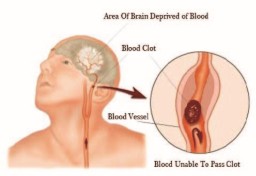
Stroke is a disease affecting arteries within and leading to the brain. It can be either related to a blockage of the flow of blood (such as related to a clot) or else a bleed into the brain which compresses the brain tissue. There is also a subtype of stroke called a transient ischemic attack (TIA) in which symptoms resolve quickly and last a short time. It should also be taken seriously, however, because it could also be a warning sign of another stroke.
Stroke is the fourth leading cause of death in the United States and is a leading cause of disability. Statistically, a stroke occurs every 40 seconds. Risk factors for a stroke include increasing age (stroke risk doubles each decade of life after 55 years), family history, race (African-Americans have a higher risk than Caucasians), gender (males have a higher risk than females), history of stroke or heart attack, high blood pressure, smoking, diabetes, cardiac disease, poor diet, and physical inactivity and obesity.
Treatment of a stroke is time-sensitive so it is imperative to know the signs and act fast! Additional symptoms include a change in vision in one or both eyes, difficulty walking, dizziness, lack of coordination or balance, and a sudden and severe headache with no known cause. Jamie’s grandmother had a good outcome because she got treatment within three hours of the onset of symptoms. There is a clot-busting medication called tissue plasminogen activator (tPA) which may reduce long-term disability for the most common type of stroke. tPA is the only FDA-approved medication for the treatment of stroke but it must be given within three hours of symptom onset (four hours in rare cases). Think FAST and remember that time is brain! Additional information can be found at http://www.strokeassociation.org
F – Face: Does the face look even? Ask the person to smile.
A – Arms: Does one arm drift? Is there numbness or weakness especially on one side
S – Speech: Does their speech sound strange? Ask the person to repeat a phrase.
T – Time: Every second brain cells die, call 911 immediately